Cybake header image

How we helped Cybake remove video consent barriers while protecting visitor privacy

Cybake’s paid social campaigns were attracting prospective customers to video case studies on its website. However, visitors who declined tracking cookies were unable to watch the videos without changing their wider consent preferences.

Drawing on updated guidance from the Information Commissioner’s Office (ICO), we developed a click-to-load solution that allows visitors to watch individual videos without accepting unrelated tracking technologies.

The result is a more straightforward customer journey, with Cybake‘s wider privacy controls remaining in place.

An example of high-end design for a software product, visualised on a laptop

About Cybake

Cybake provides specialist enterprise resource planning (ERP) software for bakeries, helping businesses manage production, orders, deliveries, and other operational processes.

Its website plays an important role in communicating the benefits of its software to prospective customers. Video case studies allow existing customers to share their experiences and demonstrate how the software supports their businesses.

Cybake uses paid social advertising, including LinkedIn and Facebook campaigns, to introduce potential customers to these case studies.

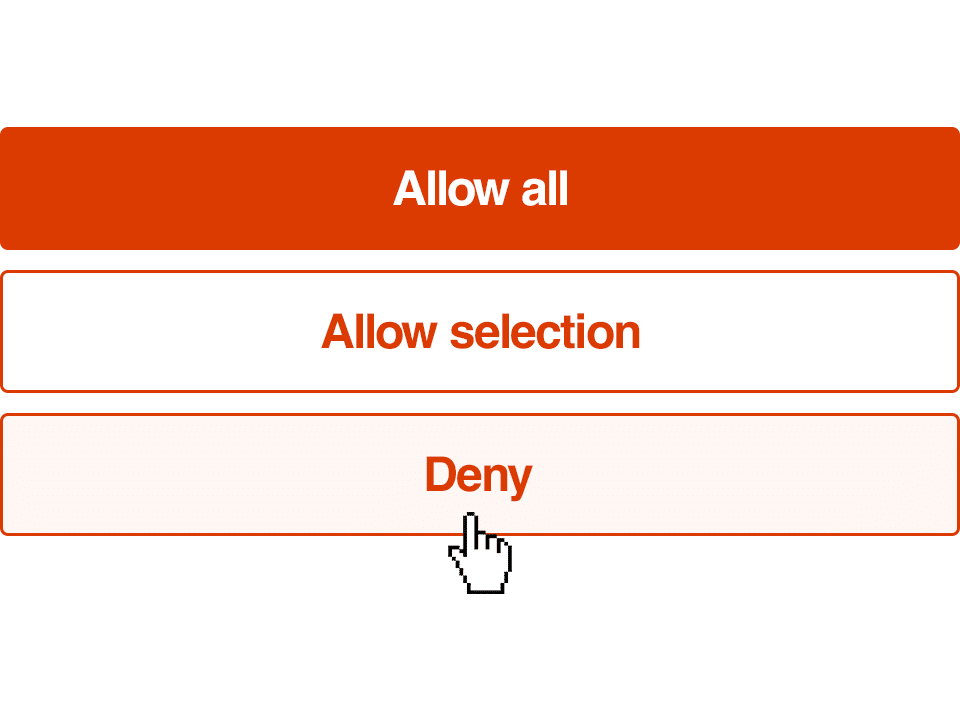
A user denying cookie consent

Visitors who declined cookies could not watch a single video

The difficulty emerged when Cybake’s marketing team reviewed the experience of visitors arriving from paid social campaigns.

Visitors who accepted the relevant consent categories could watch the embedded videos normally. Those who declined tracking, however, encountered a problem. The website correctly prevented the third-party video player from loading, but offered no direct way to watch an individual video.

Instead, visitors had to reopen their cookie settings and change their wider consent preferences.

For someone who had followed an advertisement specifically to watch a video case study, this introduced unnecessary friction at an important point in the customer journey.

Our challenge was to remove that obstacle without weakening the consent controls already in place

Vimeo logo visualised on a desktop device

Investigating the alternatives

We began by reviewing the existing consent implementation and investigating whether the problem could be resolved through configuration changes.

We considered whether switching from YouTube to Vimeo would improve the experience and examined the privacy-enhanced options offered by both platforms.

These measures offered benefits, but did not address the underlying issue. Loading a third-party video player involves communication with an external service and the use of cookies or similar technologies, regardless of which platform hosts the video.

The solution was to reconsider when the website established that connection.

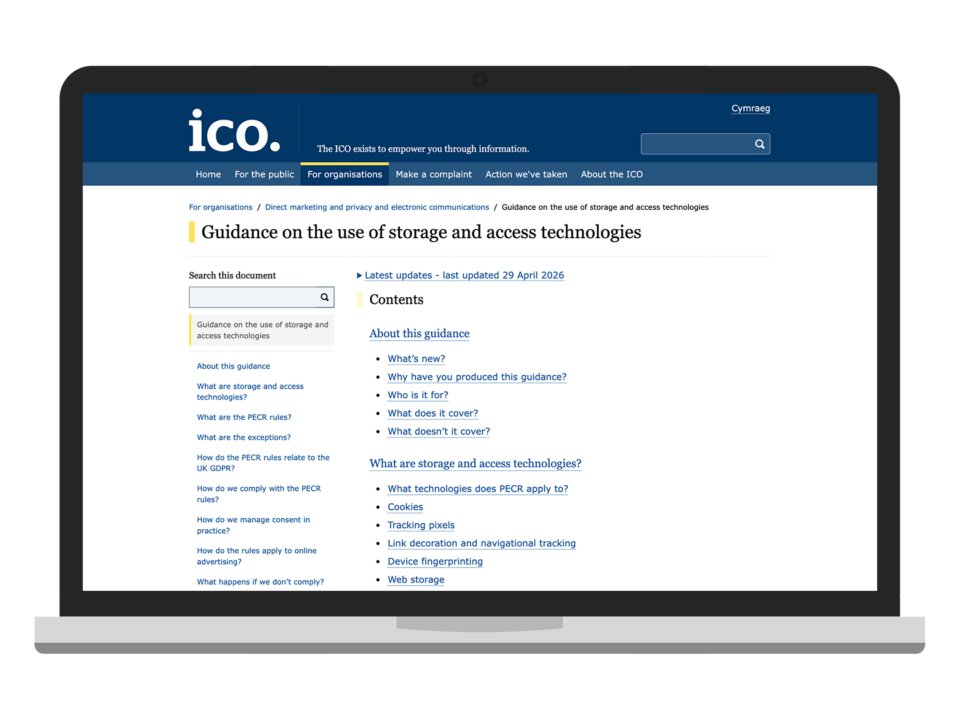
ICO guidance visualised on a desktop device

Updated ICO guidance provided the basis for a better approach

In April 2026, the Information Commissioner’s Office published updated guidance clarifying how PECR applies to storage and access technologies, including those associated with embedded content.

Importantly, the guidance explains that websites can allow visitors to request embedded videos through a deliberate action, such as pressing Play, without requiring separate consent for storage or access that is necessary to deliver the requested content.

The conditions are important. The website should not load the third-party player or allow it to access information on the visitor’s device before the visitor requests the video. Visitors must also be informed that pressing Play will load external content and may involve cookies or similar technologies.

Where those requirements are met, the visitor’s deliberate request provides the basis for loading the video without requiring consent through the website’s wider consent management platform.

This exception does not extend to unrelated advertising, profiling, or analytics activities, which must remain subject to the appropriate controls.

For Cybake, the guidance provided a clear regulatory basis for improving the video experience while maintaining the wider privacy framework.

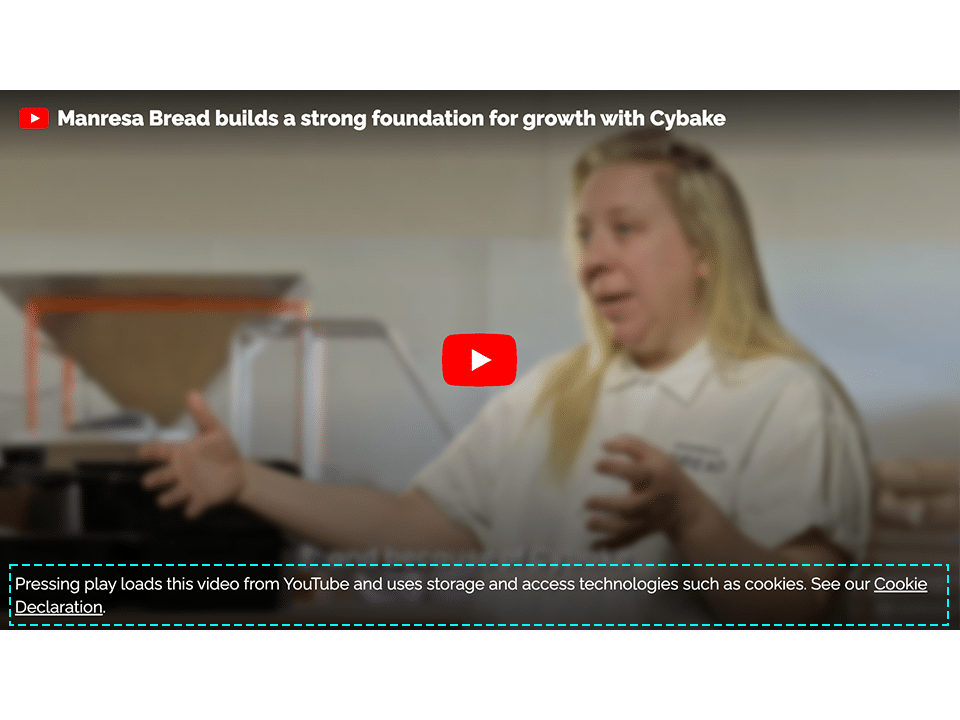
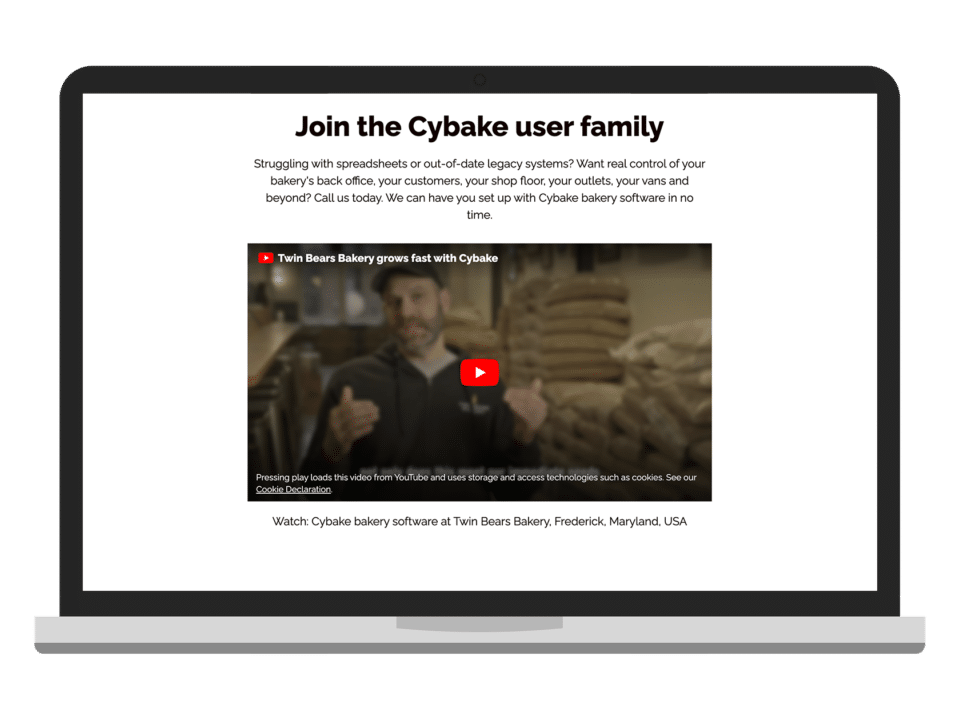
An example of an enhanced Cybake Youtube video

What we did: developed an automatic click-to-load video system

We developed a click-to-load system for Cybake’s YouTube and Vimeo embeds.

When a page initially loads, the website displays a locally served thumbnail and Play button without loading the external video player.

Visitors are informed that pressing Play will load content from the relevant third-party provider and may involve cookies or similar technologies. When they choose to watch the video, the website establishes the connection and loads the player.

This allows visitors to watch an individual video without reversing their wider decision to decline tracking cookies.

We also incorporated the privacy-enhanced options available from YouTube and Vimeo as additional safeguards.

Rather than implementing the functionality separately on individual campaign pages, we developed it to work automatically throughout Cybake’s website.

The solution applies to existing content and videos added in future, without requiring Cybake’s marketing team to follow a separate publishing procedure.

This addressed the immediate campaign problem while providing a consistent, maintainable approach to embedded video across the website.

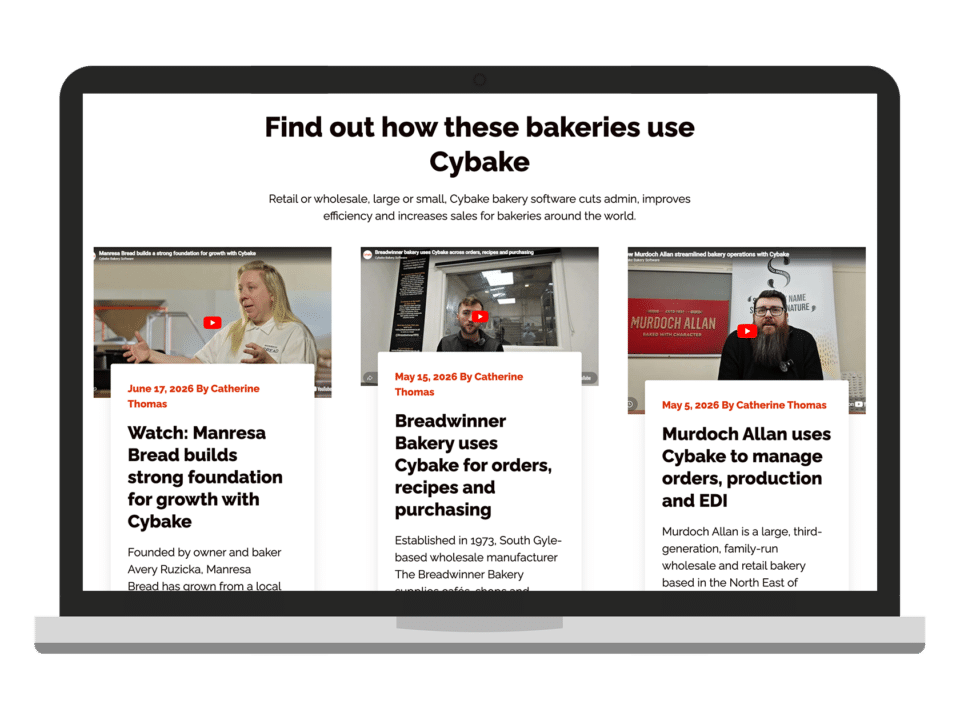
Cybake website visualised on a desktop device showing multiple videos on the site

Visitors can now decline tracking and still watch the videos

Cybake’s website now distinguishes between a visitor’s general tracking preferences and their deliberate decision to load an individual video.

Visitors who decline non-essential tracking can still access video case studies through a single, informed action, without changing their original consent preferences.

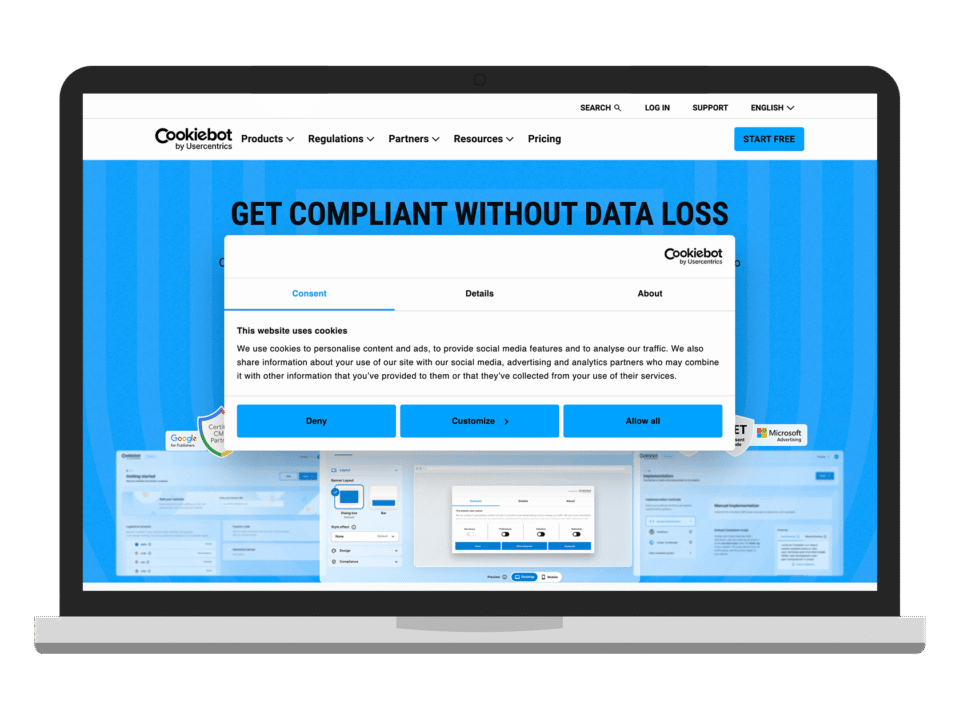
The Cookiebot implementation remains in place, continuing to manage consent for the other technologies used on the website.

The result is a more accessible marketing journey, with an unnecessary barrier removed and the wider privacy controls retained.

The solution also reduces ongoing maintenance by applying consistently to current and future video content.

Although comparative figures for video engagement or campaign conversions are not currently available, the original usability problem has been resolved.

An example of how visitors can now make a normal consent choice visualised on a desktop device

Privacy and usability can work together

This project demonstrates why effective consent management involves more than installing a cookie banner.

It requires an understanding of how third-party technologies behave, how visitors interact with them, and how regulatory guidance can be applied to improve the website experience.

For Cybake, the solution was not to weaken privacy protections, but to implement them more precisely.

By combining technical development with an understanding of the ICO’s updated guidance, we removed an obstacle from an important marketing journey while maintaining appropriate consent controls.

cybake.com

Get in touch and let’s discuss how we can help