Building websites for University of York-affiliated organisations

The University of York is home to a wide range of research groups, consultancies, and specialist projects. Many need to communicate highly specialised information to audiences with very different levels of knowledge, requiring websites that support academic rigour while remaining accessible to policymakers, healthcare professionals, businesses, funding bodies, and the wider public.

Castlegate has recently worked with three organisations connected to the University of York, each requiring a distinct technical solution to a shared communication challenge. Below, we look at the websites we built for York Health Economics Consortium, Valuing Voices, and the REFoRMS Project. Together, they demonstrate our ability to handle complex subject matter without losing sight of the people who need to understand it.

An example of high end academic design visualised on a desktop device

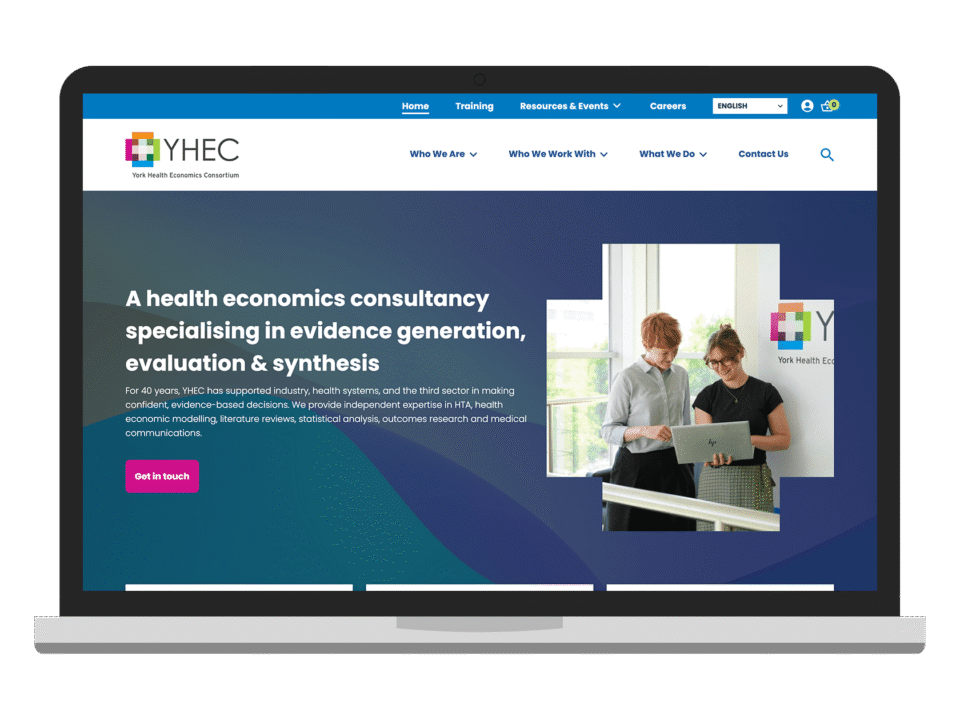
York Health Economics Consortium

Established by the University of York in 1986, YHEC has built a global client base across pharmaceuticals, medical technology, and the public sector. The problem was that their existing website undersold that reputation, offering little sense of the scale or sophistication of their work.

Our rebuild focused on giving structure to that scale. We brought together more than 500 research publications within a searchable resource, enabling visitors to explore material by therapeutic area, geography, and other key criteria. We also built an A-Z glossary to help visitors find precise terminology quickly.

On the commercial side, we built custom ecommerce functionality that allows organisations to book multiple delegates onto a single training course booking, streamlining what had previously been a more limited process. Multi-language translation and a unified set of brand guidelines completed the project, reflecting YHEC’s standing as an international organisation.

The result is a website that better reflects YHEC’s international reputation while making its research, expertise, and training considerably easier to explore.

Learn more about YHEC

An example of high end academic design visualised on a desktop device

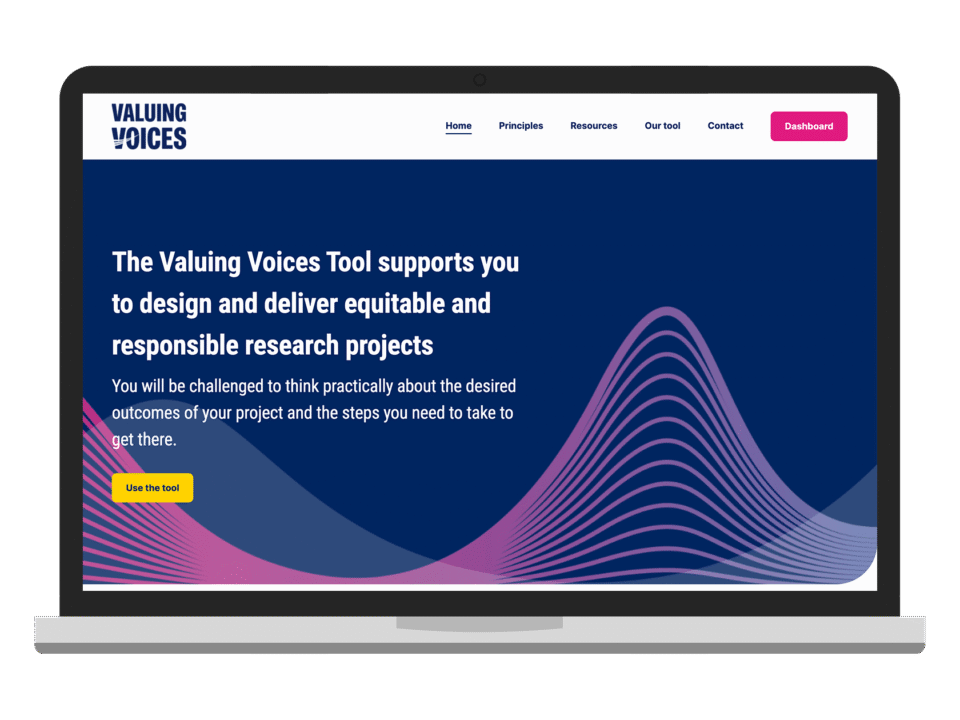
Valuing Voices

Funders are increasingly assessing academic projects against Responsible Research and Innovation criteria, yet researchers rarely have practical tools for building these principles into their planning from day one. Valuing Voices, a Wellcome Trust-funded initiative led by the University of York, set out to close that gap, and needed a technical partner willing to commit to a multi-phase build.

Rather than a static explainer, we built an interactive planning tool that turns Valuing Voices’ academic framework into a guided process, with responses feeding into a downloadable report at the end. Institutional email addresses unlock relevant resources without forcing anyone through account creation, and a saved dashboard allows researchers to pick up where they left off. Behind the scenes, we set up tracking on user behaviour and feedback during phase one, giving the Valuing Voices team the evidence they needed to shape phase two.

The website transforms a complex academic framework into a practical resource that researchers can use throughout the lifetime of a project.

Learn more about Valuing Voices

An example of high end design for a charity organisation visualised on a desktop device

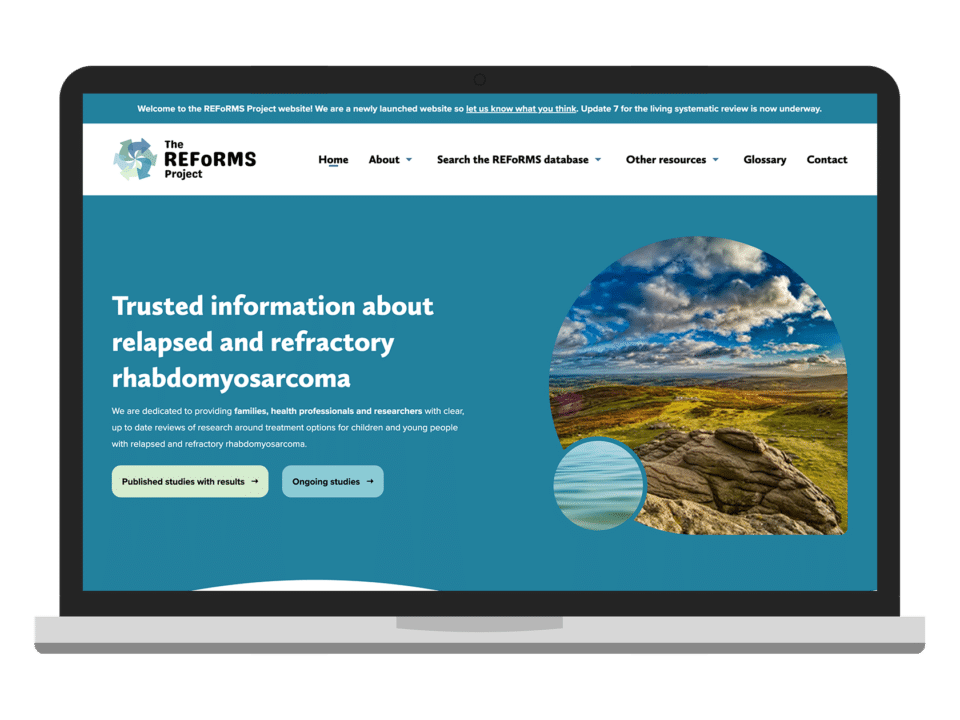
The REFoRMS Project

Relapsed and refractory rhabdomyosarcoma is rare enough that useful information is scattered and hard to interpret, particularly for the families affected by it. The REFoRMS Project, a University of York research programme, set out to consolidate the evidence on early phase clinical studies into one place, for an audience ranging from parents to clinicians and researchers.

That range of users shaped the build. We created a bespoke WordPress database split into published studies and clinical trials, with study pages laid out in a tabbed format covering eligibility, interventions, participants, adverse events, and outcomes, allowing each study to present the information available in a consistent and accessible format.

Studies that meet defined quality criteria are marked as featured, helping users identify the strongest available evidence more quickly. Both sections can be filtered by treatment, tumour type, country, and trial phase, while results can be exported as a PDF without logging in. A glossary helps non-specialists understand specialist terminology, and the database has been designed to grow alongside future updates to the underlying systematic review.

The result is a resource that helps families, clinicians, and researchers find reliable evidence more quickly and with greater confidence.

Learn more about the REFoRMS Project

jim semlyen managing director planning

Building websites for research, consultancy and academic organisations

Every organisation connected with the University of York had different technical requirements, audiences, and objectives. What they shared was the need for a website that could communicate complex information clearly, support long-term growth, and remain straightforward to manage.

Whether you are a research project, consultancy, academic department, or public sector organisation, we combine technical expertise with careful planning to build websites that make specialist information easier to access, easier to maintain, and better aligned with your organisation’s goals.

If you have a website project you would like to discuss, we would be pleased to hear from you. Call us on 01904 654 036 or emailĀ info@castlegateit.co.uk.