Is your website ready for AI search?
At a glance
- AI is changing how people find information, with tools such as ChatGPT and Google’s AI features increasingly answering questions directly.
- SEO still matters, but it’s no longer the whole picture. Websites also need to be understandable to AI systems.
- Good content and structure are fundamental. Clear, authoritative information, semantic HTML and structured data help AI understand your organisation.
- Technical foundations matter. Accessibility, crawlability and performance all help automated systems retrieve and interpret content.
- There are no guaranteed shortcuts. Focus on useful content, sound technology and established web standards.
AI search readiness is about making your website clear, useful and accessible to people, search engines and AI systems.
Artificial intelligence is changing how people find organisations online – be part of the solution.
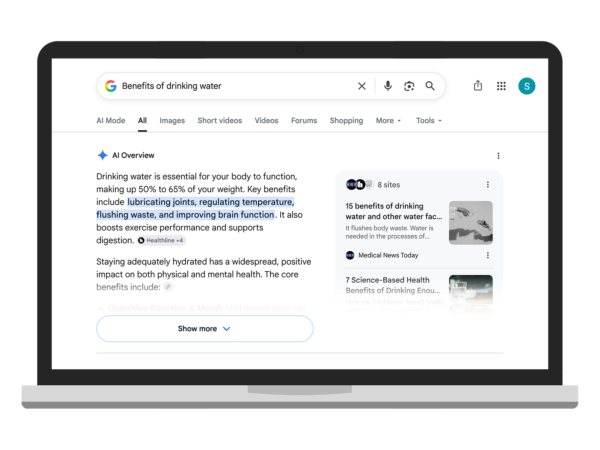
Instead of browsing pages of Google results, many people now ask questions directly to tools such as ChatGPT or Google’s AI search. Rather than showing a list of websites, these services often provide a single answer or recommend a small number of organisations.
This means your website needs to do more than look attractive. It needs to explain clearly who you are, what you do and why someone should engage with your organisation.
The good news is that you probably do not need a completely new website. In most cases, improvements are straightforward.
What has changed?
Traditionally, someone looking for information, a service, an organisation to support, a research project to engage with, or a business to work with would visit several different websites before deciding what to do next.
Increasingly, AI tools carry out much of that research on the user’s behalf.
Whether someone is looking for a charity, a museum, a university department, a public service, professional advice or a commercial supplier, AI tools are increasingly helping them decide where to go next.
If your website is clear, well organised and regularly maintained, it is much more likely to appear in those recommendations. If it is out of date or difficult to understand, it may simply be overlooked.
Five questions to ask about your website
You do not need technical knowledge to carry out a quick review.
Ask yourself:
- Does the website clearly explain who we are, what we do and who we help?
- Would a first-time visitor quickly understand the information, services or support we provide?
- Do we know whether our website includes structured data (sometimes called schema)? This helps search engines understand our content clearly, and may support AI tools in doing the same.
- Are we actively monitoring how our website performs in Google Search Console and AI search tools?
- Has the website been reviewed or updated within the last year?
If you answered “no” or “I’m not sure” to several of these questions, your website is unlikely to be making the best impression on either visitors or AI search tools.
Looking after your website
Preparing for AI search is not about chasing the latest technology.
It is about keeping your website accurate, easy to understand and well maintained.
Regularly reviewing your content, removing outdated information and ensuring your website reflects your organisation today will benefit both your visitors and your visibility online.
Whether your aim is to attract customers, recruit members, encourage donations, publish research, promote events or simply make important information easier to find, these principles remain the same.
How we can help
We help organisations keep their websites secure, up to date and performing well.
As part of that process, we can review how clearly your website presents your organisation and identify practical improvements that will help both visitors and modern AI search tools understand your content.
This might include reviewing your content, checking whether your website uses structured data effectively, assessing how easily AI tools can understand your website, or helping you monitor how your organisation appears in AI-powered search.
Some websites need only a few small changes. Others benefit from a more detailed review.
If you would like an independent assessment of your website, we would be happy to help. We are always happy to begin with an informal conversation before making any recommendations.



 '
'

 '
'